
Many software disappointments are not coding failures. The software does what was asked. What was asked did not solve the problem.
That is why the first conversation matters more than the technology, and why it is worth choosing a custom software development company by how it handles that conversation.
What to Look For in a Technology Partner
- Do they ask what is going wrong and what it costs, before talking about solutions?
- Do they look at what you already have?
- Do they lay out options, including the option of doing less?
- Do they explain trade-offs in plain language?
- Do they hand over code, documentation and credentials so you are not dependent on them?
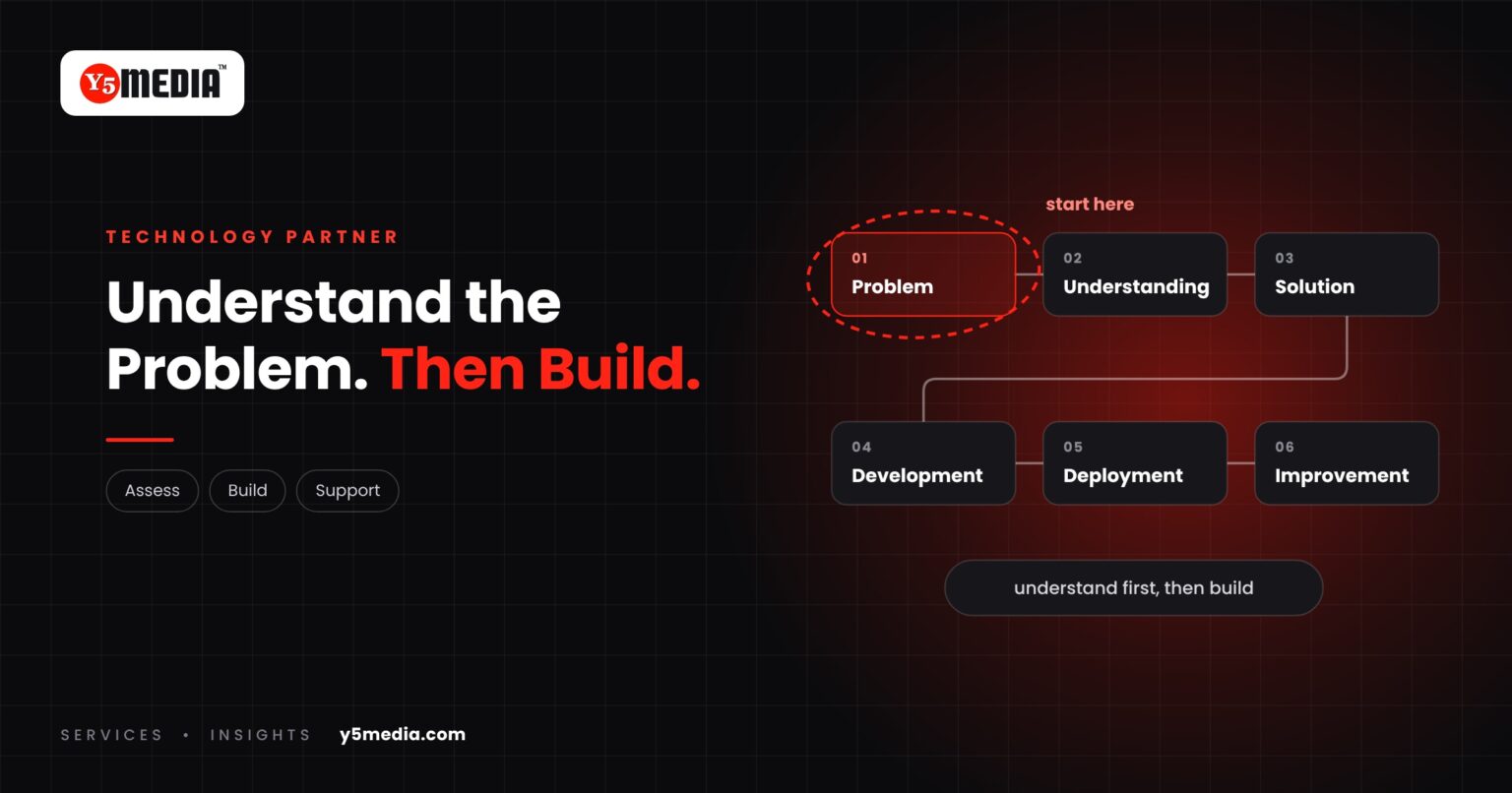
How Y5MEDIA Approaches a Software Requirement
- Business problem. What is going wrong, who it affects and what it costs. In your words, not technical ones.
- Technical understanding. A look at what exists: current software, data, hosting and the workflow around them.
- Solution. The options, laid out honestly. That may be new development, modernization, migration, integration or leaving things as they are.
- Development. Building what was agreed, with the business able to see progress as it goes.
- Deployment. A planned move into real use, with testing first.
- Ongoing improvement. Software keeps changing because businesses do. Support, fixes and new requirements continue after launch.
The first two steps decide whether the last four are worth doing.
What You Can Discuss With Us
- Understanding and documenting a requirement
- Technical assessment of existing software
- Custom software and web application development
- Modernization of older systems
- Migration planning
- Integration between systems
- Ongoing technical support
What We Will Not Do
- Quote for a rebuild before understanding what you have.
- Tell you custom software is the answer when a packaged product would do.
- Promise that a migration will be simple before looking at the system.
Frequently Asked Questions
Do we need a written specification before contacting you?
No. You need to be able to describe what the system does today, what it no longer does well and what the business needs next. Turning that into a specification is part of the work.
Will you work with software someone else built?
Yes, subject to an assessment. We need to see the code, data and hosting before saying what is realistic, and we will tell you plainly if the system is not in a state we can responsibly maintain.
What happens after the software goes live?
Software needs continued attention: fixes, security updates and changes as the business evolves. We discuss ongoing support at the start, so it is planned for and not an afterthought.
What to Remember
- Many software projects disappoint because the wrong thing was specified.
- Judge a partner by the first conversation: questions before solutions.
- Our sequence runs from business problem to ongoing improvement.
- A good partner will tell you when to do less.
- Handover of code, documentation and credentials protects you.
Where to Go Next
If the approach makes sense to you, the next step is a conversation about your problem, not our services. Our process explains how an engagement runs.
For the reasoning behind this approach, start with when generic software stops fitting your business.
Case Studies
Real and illustrative projects, with the problems and lessons behind them.
Learn more →ERP Implementation Case Study
Lessons from connecting a large, decentralised education network on one ERP ecosystem.
Learn more →Our Process
How an engagement runs, from first conversation to handover.
Learn more →Have a Software Problem?
Tell us what is going wrong. We would rather start by understanding it than by quoting for it.