
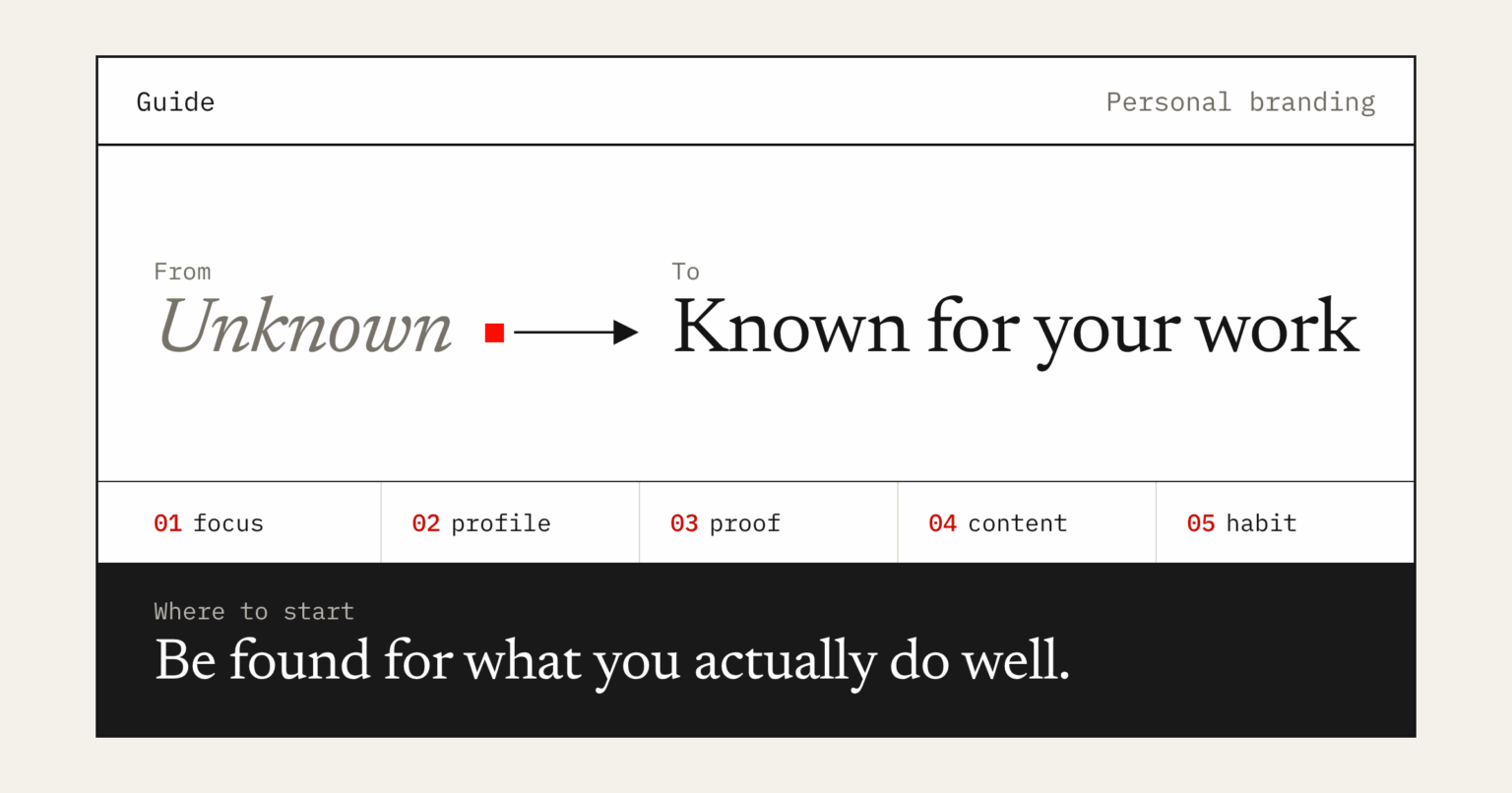
Before a client signs, before an investor takes a meeting, before a senior hire accepts an offer, someone searches the name of the person they are about to deal with. What they find in that minute shapes the conversation that follows. For most founders and professionals, what they find is thin, out of date or about somebody else.
Personal branding for founders is not self-promotion. It is the work of making sure that the people who look you up find an accurate and useful picture of what you do well. This guide explains where to start.
What a Personal Brand Is, and Is Not
It is the impression people form of your professional self from what they can find and what others say. You have one whether you manage it or not. Managing it means making that impression accurate and complete.
It is not a persona, a slogan or a large follower count. Nor does it require posting every day. Many well-regarded professionals have a modest online presence that is simply clear, current and consistent.
Step 1: Decide What You Want to Be Known For
Choose one or two subjects where you have real experience and something to say. “Business leader” is too broad to be remembered. “Builds software for schools” or “helps family firms plan succession” gives people something to attach your name to.
Step 2: Make the Basics Consistent
| Element | What to check |
|---|---|
| Name | The same form everywhere. Initials in one place and a full name in another split your presence in two. |
| Photograph | One recent, professional image used across profiles. |
| Short biography | Two or three sentences saying what you do and for whom, in plain words. |
| Current role | Titles and organizations up to date on every profile. |
| Contact route | A clear, professional way to reach you. |
This is unglamorous and it matters more than anything that follows. An inconsistent presence looks careless, and search engines and AI assistants find it harder to recognize as one person.
Step 3: Have a Home Base
Social profiles belong to the platforms. A page you control, whether a personal site or a proper biography page on your company’s website, gives you one place that says what you want said and that other profiles can point to.
Step 4: Show Evidence
Claims persuade nobody. Evidence does:
- Projects you led and what they achieved, described accurately.
- Articles, talks and interviews under your name.
- Qualifications, memberships and roles you actually hold.
- Recommendations from named people who have worked with you.
Use only what is true and what you are permitted to share. A single invented credential, once noticed, undoes years of honest work.
Step 5: Publish Steadily
You do not need volume. A useful article every few weeks on the subjects you chose in step one will do more than daily posts about nothing in particular. Write about problems your clients face, decisions you have had to make and lessons that cost you something to learn. Our article on building authority explains why this kind of content is trusted.
Shortcuts to Avoid
- Bought followers and engagement. Easy to spot, and they tell people what you value.
- Inflated titles and awards. Including awards anyone can obtain by paying.
- Paid placements presented as editorial coverage. See paid, sponsored or earned.
- Content that is not yours. Copied posts and unattributed ideas.
- A voice that is not yours. Help with writing is normal. Views you do not hold are not.
How Long It Takes
Months, not weeks. Search results and public perception change slowly, and nobody can guarantee a particular ranking, a piece of coverage or how an AI assistant will describe you. What steady, honest work does is make the outcome steadily more likely. To see where you stand today, start with a personal online reputation audit.
Frequently Asked Questions
Is personal branding only for people who want to be famous?
No. For most professionals the aim is to be found and understood by a small number of people who matter: clients, partners, employers and investors.
Should a founder’s brand be separate from the company’s?
They support each other. People trust companies partly through the people who lead them, so the two should tell a consistent story.
Do I have to be on every platform?
No. One or two platforms where your audience actually is, kept current, are better than six neglected profiles.
Can someone else write my content?
Help with drafting and editing is common. The ideas, experience and opinions should be your own.
What to Remember
- People look you up before they deal with you.
- Choose one or two things to be known for.
- Make name, photo, biography and role consistent everywhere.
- Show real evidence, and publish steadily.
- Avoid shortcuts. They cost more than they save.
How Y5MEDIA Approaches This
Personal Branding, Reputation Management and Digital PR is a selective Y5MEDIA Premium service for people and organizations acting lawfully and honestly. Reputation work is taken on only where someone is the target of false news, false comments or fake reviews. We do not help anyone suppress genuine criticism. It starts with an assessment of the facts, the scope is agreed in writing, and it does not include guaranteed rankings, removals or media coverage.
Personal Branding and Reputation
A selective Y5MEDIA Premium service for people and organizations whose name matters.
Learn more →AI Visibility Management
How your brand appears in search results and in AI answers.
Learn more →Digital PR Distributions
Announcements and expert content distributed through relevant channels.
Learn more →Want to Be Found for What You Do Well?
Tell us what you do, who needs to find you and what they see today. We begin with an assessment, and engagements are accepted after a suitability review.
Call or WhatsApp +91 7902024242, email support@y5media.com, or use the contact page.